
The project at a glance
- Client: Darktrace. Project: SECURE AI product launch for Darktrace Live.
- Banana Swift’s role: filming and editing the launch video.
- Production: two filming days, with around two hours for space preparation and setup.
- On set: camera crew including a second camera operator, a make-up artist and a producer supplied by Darktrace.
- Post-production: editing with assets supplied by Darktrace’s creative team, including overnight edits, corrections and revisions against tight deadlines.
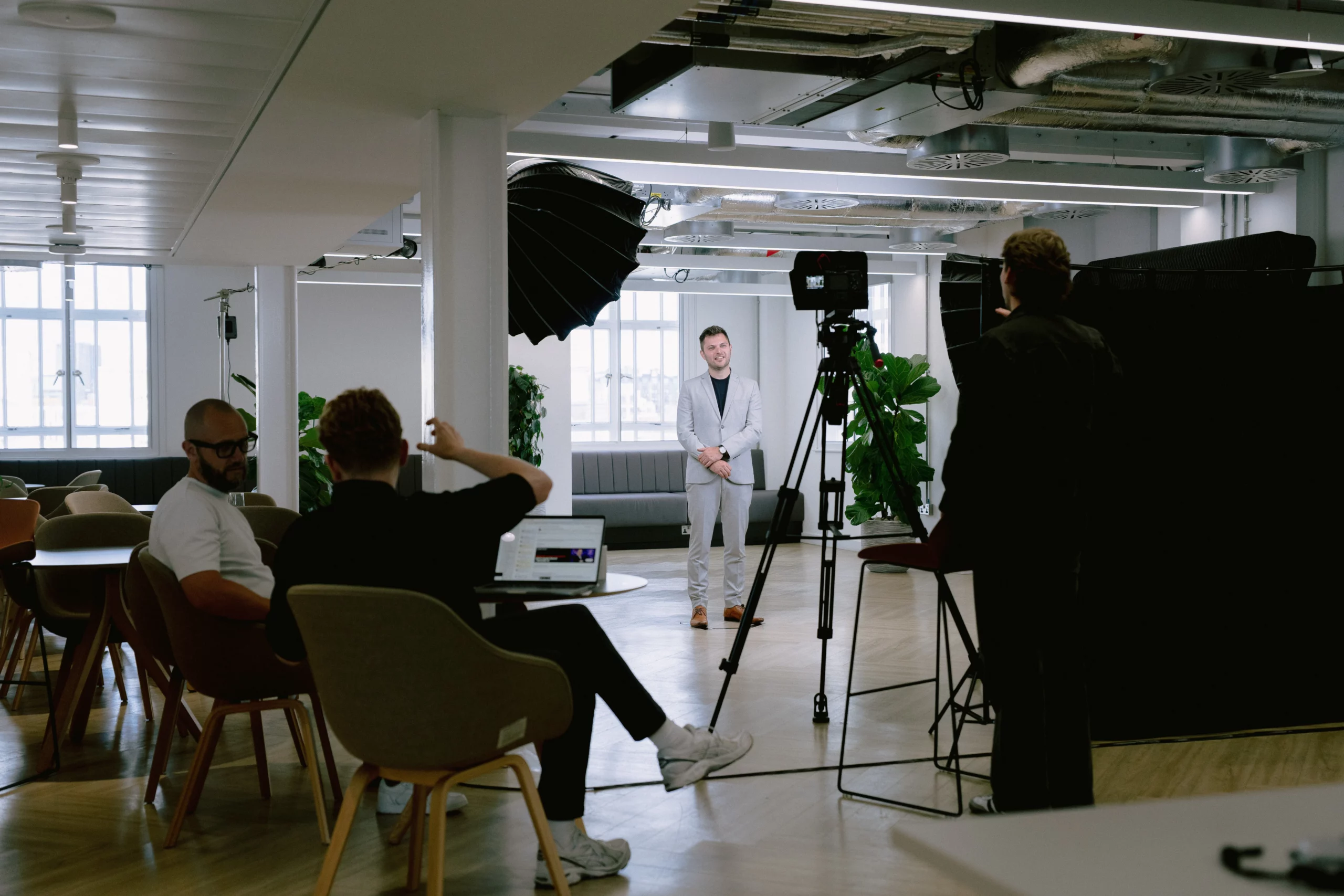
The shoot starts before the cameras roll
An office may provide the right setting for a product launch, but it is not a ready-made studio. Before recording could begin, there was equipment to unload at the parking bay, security arrangements to follow and a filming space to arrange.
Preparing the space and setting up took around two hours. That time mattered: cameras, tripods, lights and stands all needed room, along with the people presenting and the crew behind them. The space visible in the finished frame was only part of the space the production needed.
For anyone planning a similar shoot, the useful distinction is between crew arrival and the first recording. They should not be the same time on the schedule. Confirm unloading arrangements, building access and access to the filming area before setting the first presenter’s call time.
Making an office work for picture and sound
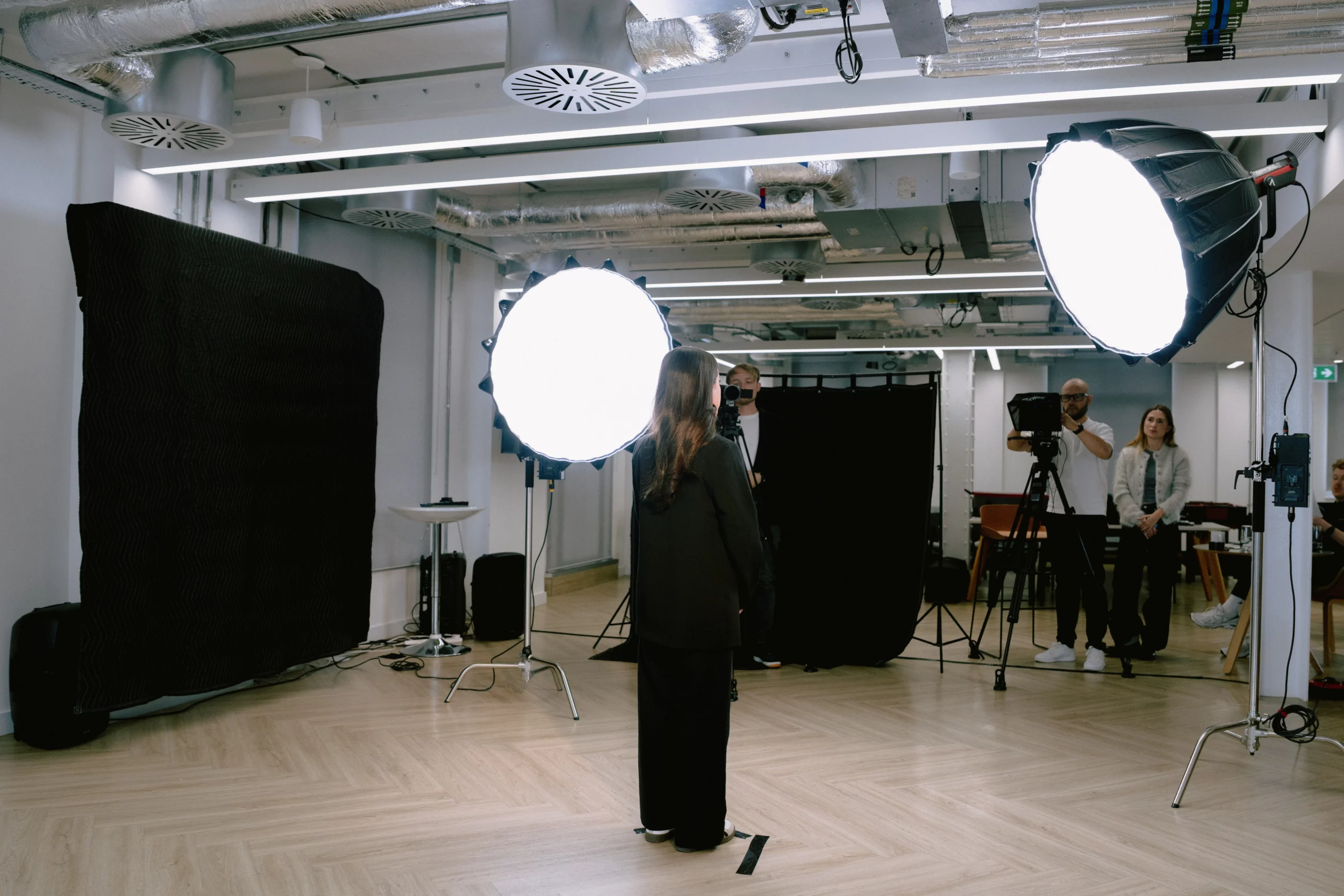
The equipment package included three lights, tripods, stands, flags, sound blankets and an autocue. Each had a practical job: lighting the presenters, controlling unwanted light, helping manage room reflections and supporting delivery to camera.
The backstage photographs show how much sits outside the final shot. Large light modifiers and blankets on stands create a very different working environment from simply placing a camera in front of someone’s desk. Planning that footprint is part of making office filming practical.
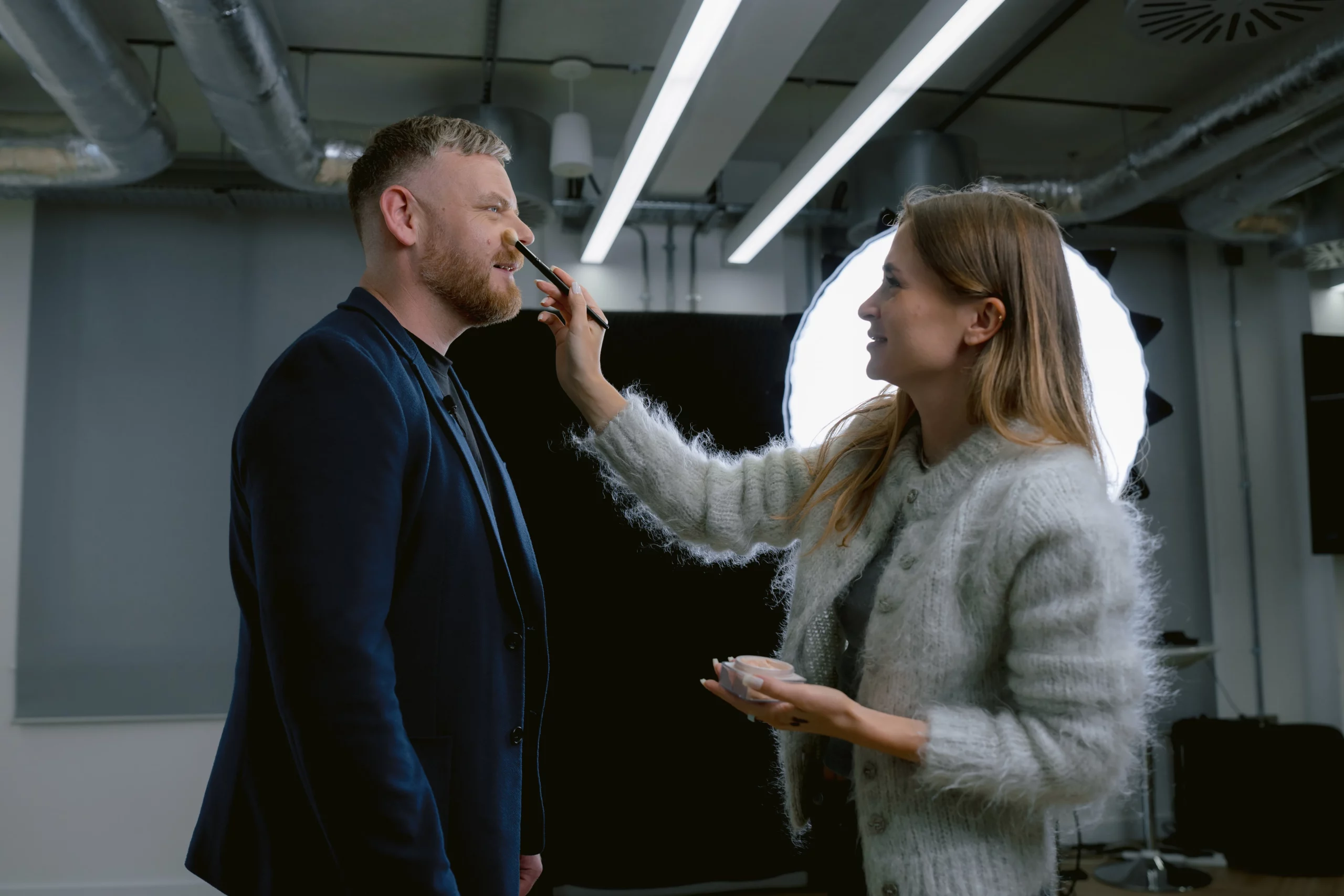
Preparing the people, not just the equipment
The production also involved a make-up artist and a second camera operator, working alongside Darktrace’s producer. Presenter preparation belonged in the schedule just as much as the technical setup.
Make-up for this kind of filming is about helping people look natural under production lighting. It is a small detail in the finished video, but a useful part of the preparation before someone steps into position. An autocue also gives presenters a reference for the script while addressing the camera.
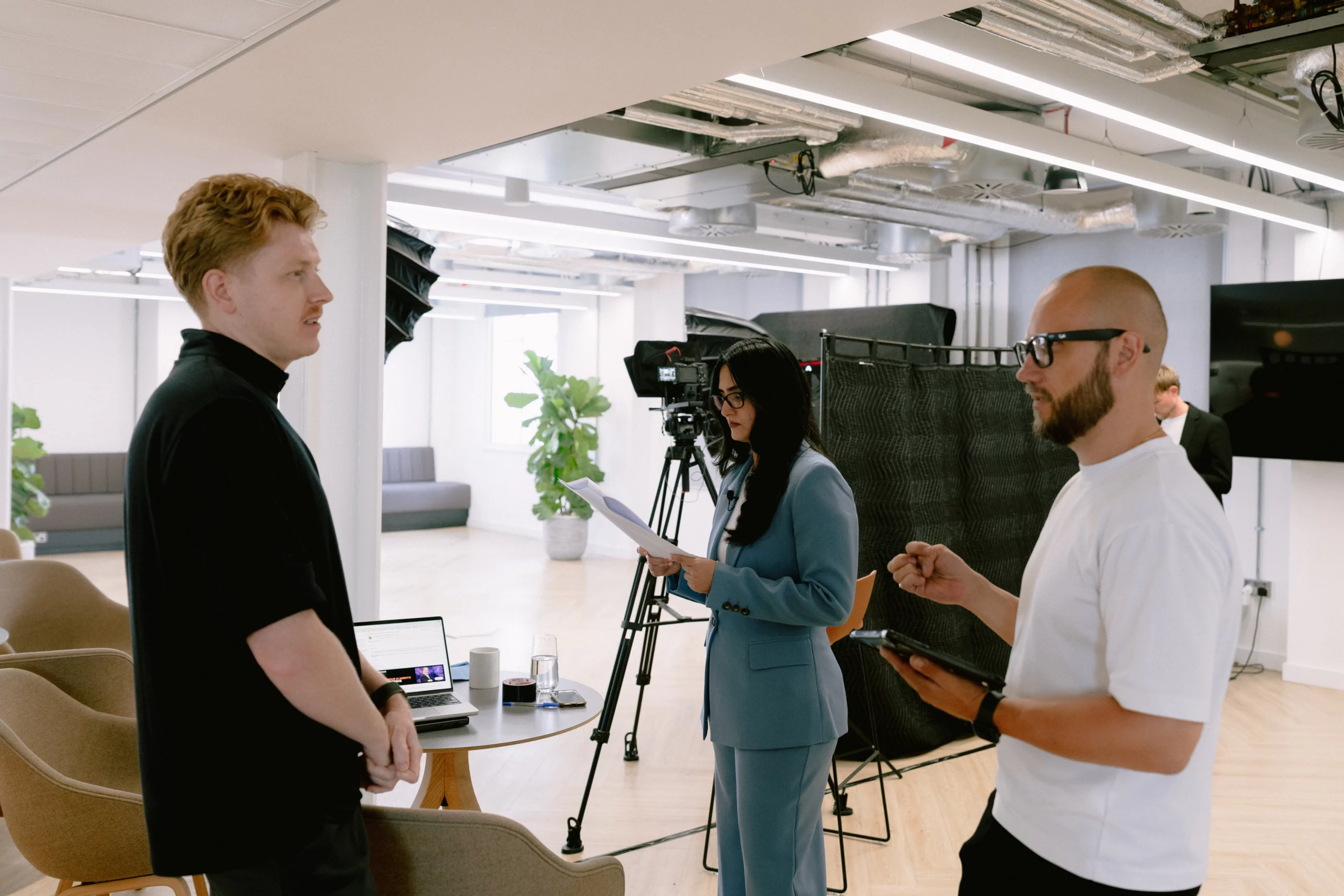
Keeping pace with an evolving script
Product-launch wording can continue to evolve close to recording. This shoot included last-minute script updates, making scheduling and coordination between the presenters, producer and camera crew an important part of the two filming days.
An autocue is useful, but it is only as helpful as the version of the script it displays. For teams preparing their own launch, we recommend agreeing who approves changes and how the latest wording reaches the producer, presenter and autocue operator. A short check before recording is far easier than discovering a wording mismatch during the edit.
From office recordings to a one-hour launch video
After filming, Banana Swift’s work continued in the edit, bringing the recorded material together with assets supplied by Darktrace’s creative team. This was a collaboration between the filming and editing team and the people responsible for the client’s creative material.
Post-production included overnight editing, corrections and revisions within a tight launch schedule. With a one-hour programme, the work extends beyond choosing individual takes: the sequence needs to remain coherent, and supplied assets need to fit the presentation.
For clients planning a similar production, the editing schedule deserves attention before the shoot. Having creative assets ready, identifying the people who need to review the film and agreeing how feedback will be collected gives the edit a clearer path. Any overnight editing requirements should be agreed for the individual project, with time set aside for review and corrections.
Planning your own office-based launch film?
The most useful lesson from this project is that filming and editing need to be planned together. Access, space, people, scripts and creative assets all affect the work — even when none of those preparations appears in the finished film.
- Allow for setup, not just recording. This project needed around two hours; your own requirement will depend on the space and equipment.
- Confirm the route from vehicle to filming area. Include unloading, security check-in and any building access restrictions.
- Leave room for the whole setup. Lights, stands, sound control and the crew need space beyond the camera frame.
- Agree a script-update and approval process. Make sure everyone records from the same version.
- Prepare the edit as well as the shoot. Share creative assets, identify reviewers and allow time for corrections before the final deadline.