
A collaboration that crossed borders
Our first project with SPhotonix took place at the University of Southampton. For our second major collaboration, we travelled to its laboratory in Neuchâtel.
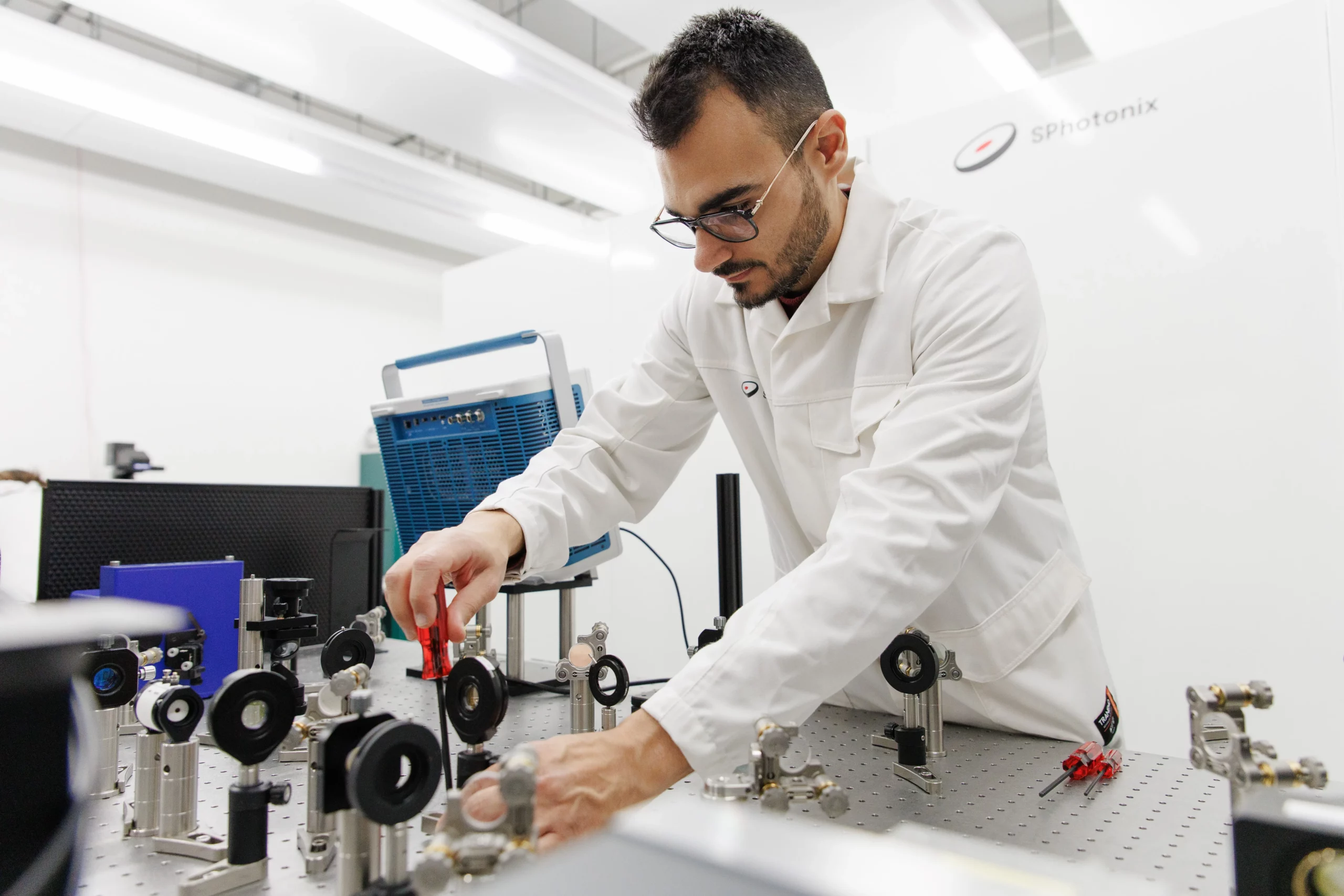
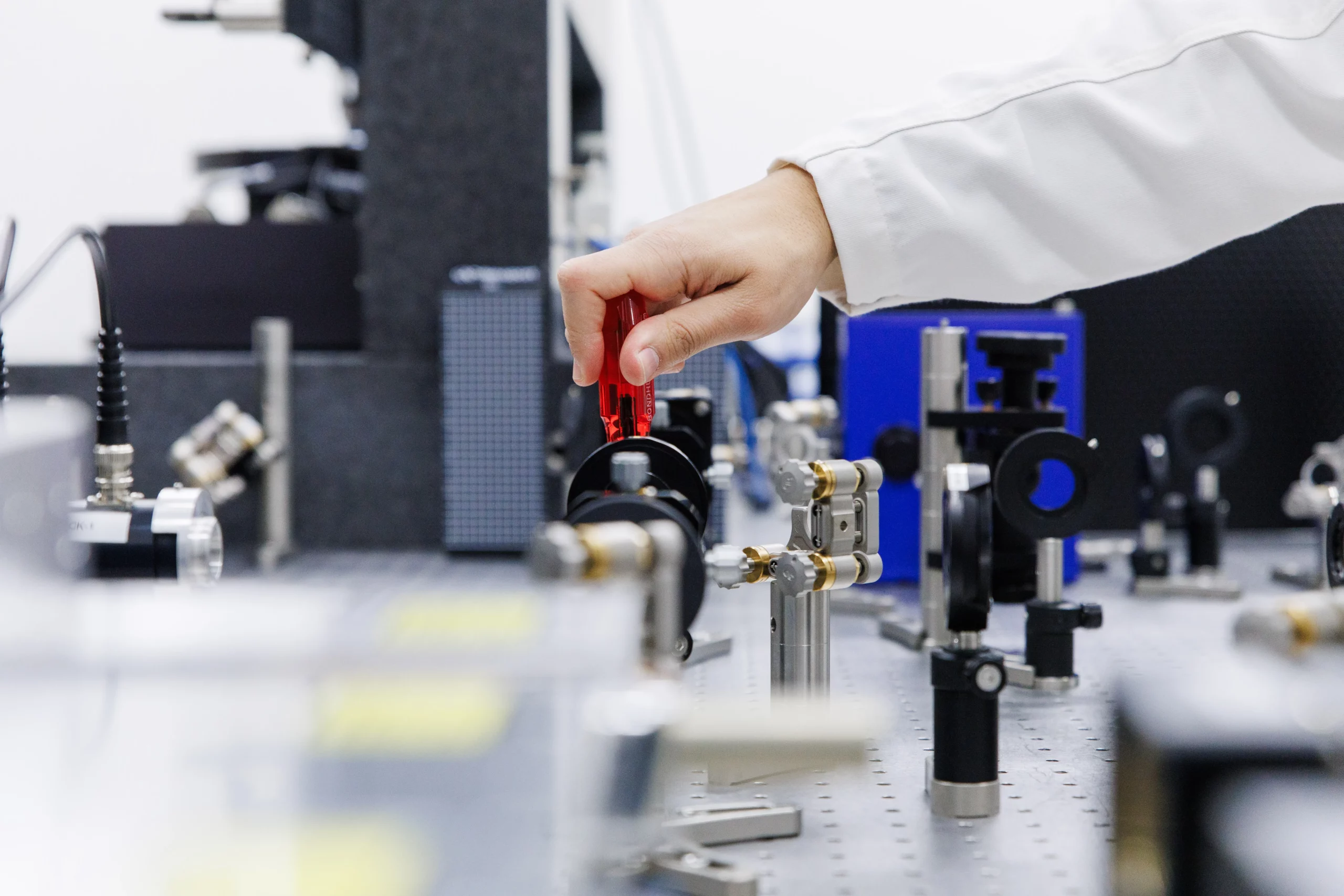
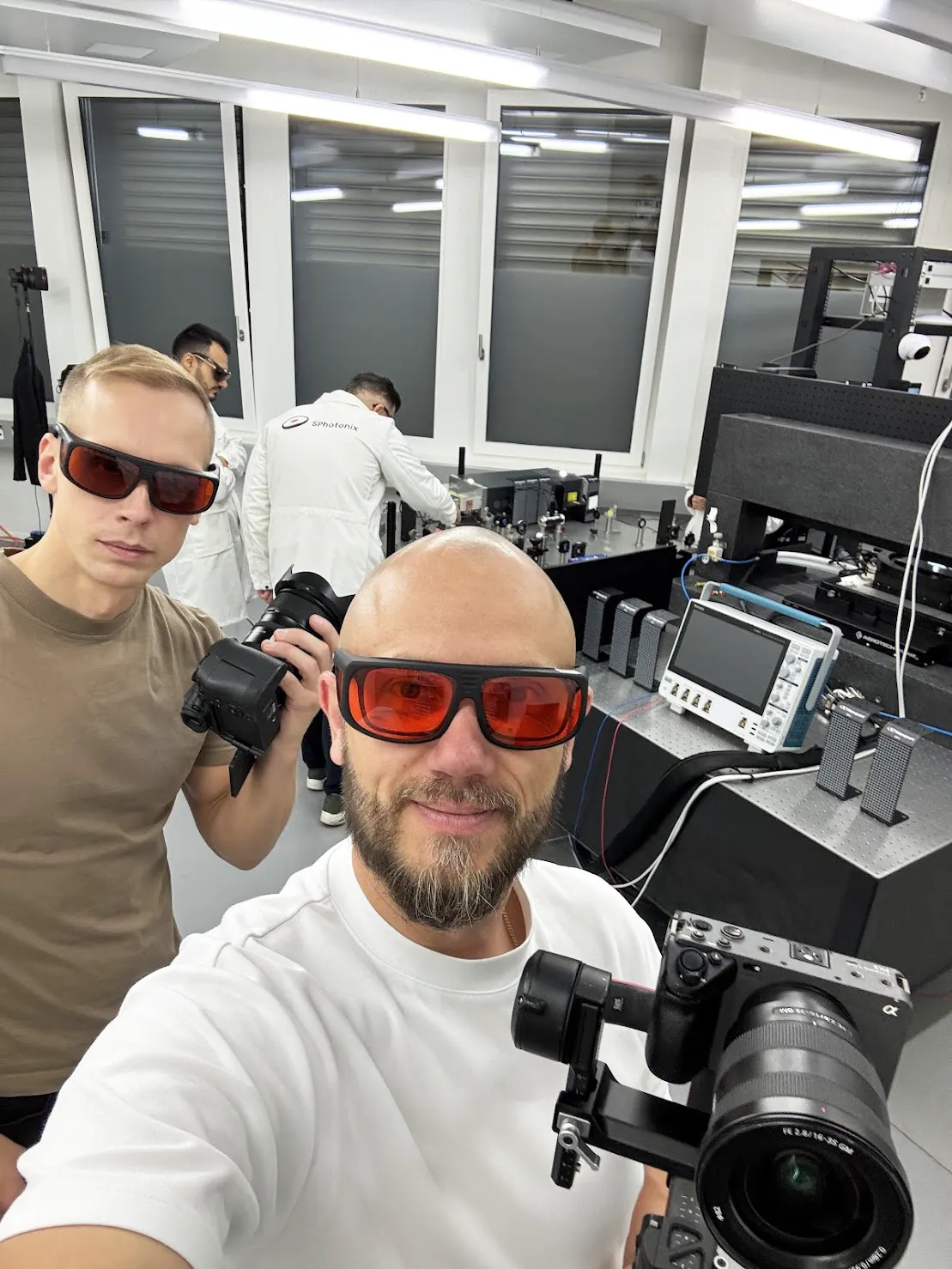
For the Swiss shoot, Banana Swift provided both videography and photography. We filmed interviews, captured the team at work and recorded b-roll—the supporting footage of equipment, processes and details that helps a viewer understand what someone is describing.
The setting made this much more than a conventional corporate shoot. We were working around specialist optical equipment, moving between interview filming, bright laboratory scenes and sequences recorded in near-darkness. Each needed a different visual approach, while still belonging to the same story.
What does SPhotonix do?
SPhotonix develops 5D optical data-storage technology and precision optics. Building on research led by Professor Peter Kazansky at the University of Southampton, its work uses ultrafast lasers to encode information in microscopic structures inside glass.
The “5D” name refers to three spatial coordinates and two optical properties used to record the information. Rather than marking only a surface, the process writes within the material. The aim is long-term data preservation: once written, the storage medium requires no power to retain its information. Writing and reading the data still require equipment and energy. Explore SPhotonix’s technology.
For a production team, that creates an interesting storytelling challenge. The object may be small, but the idea behind it is enormous. A film needs to make the science approachable without losing the precision that makes it credible.
Interviews give the technology a human voice
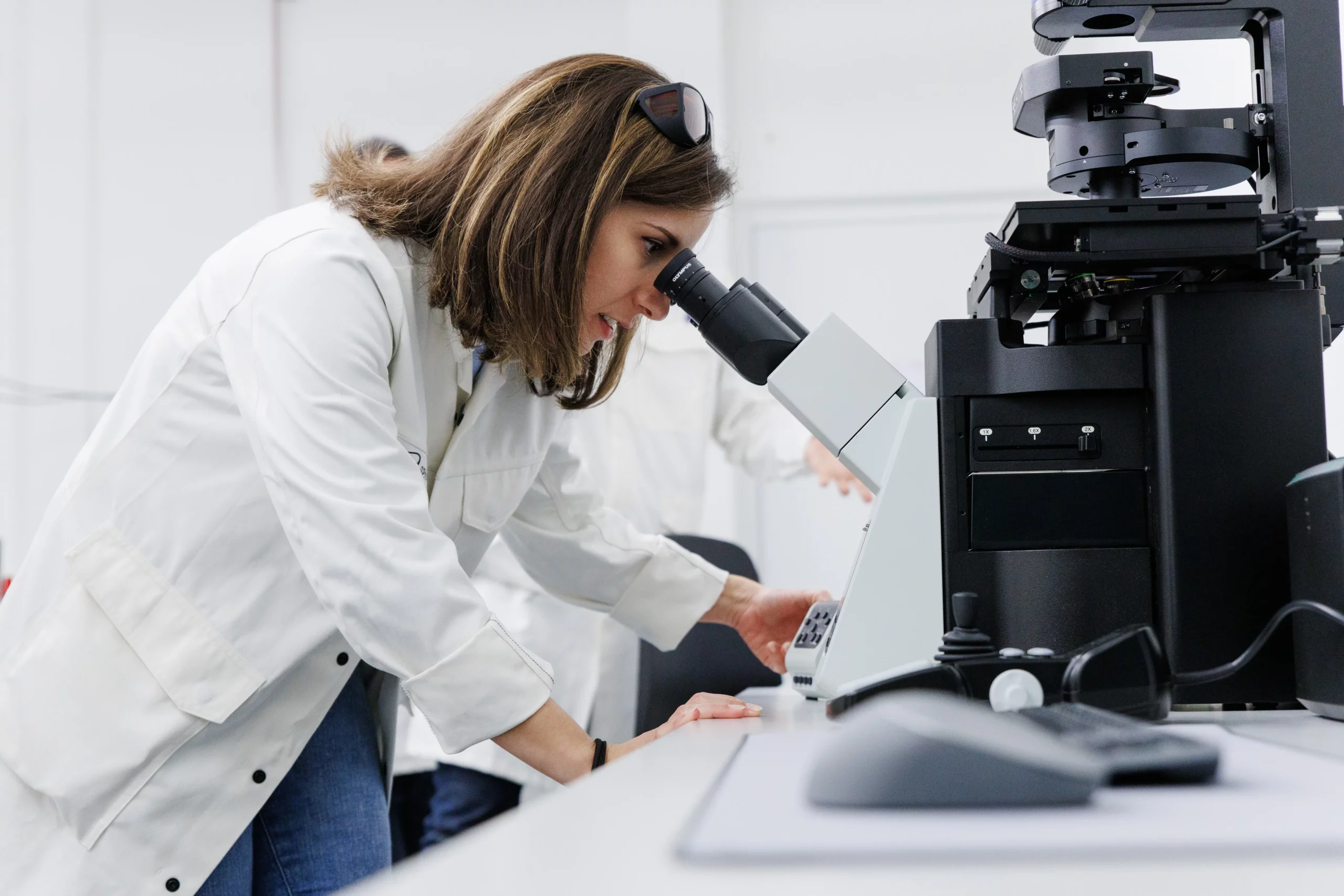
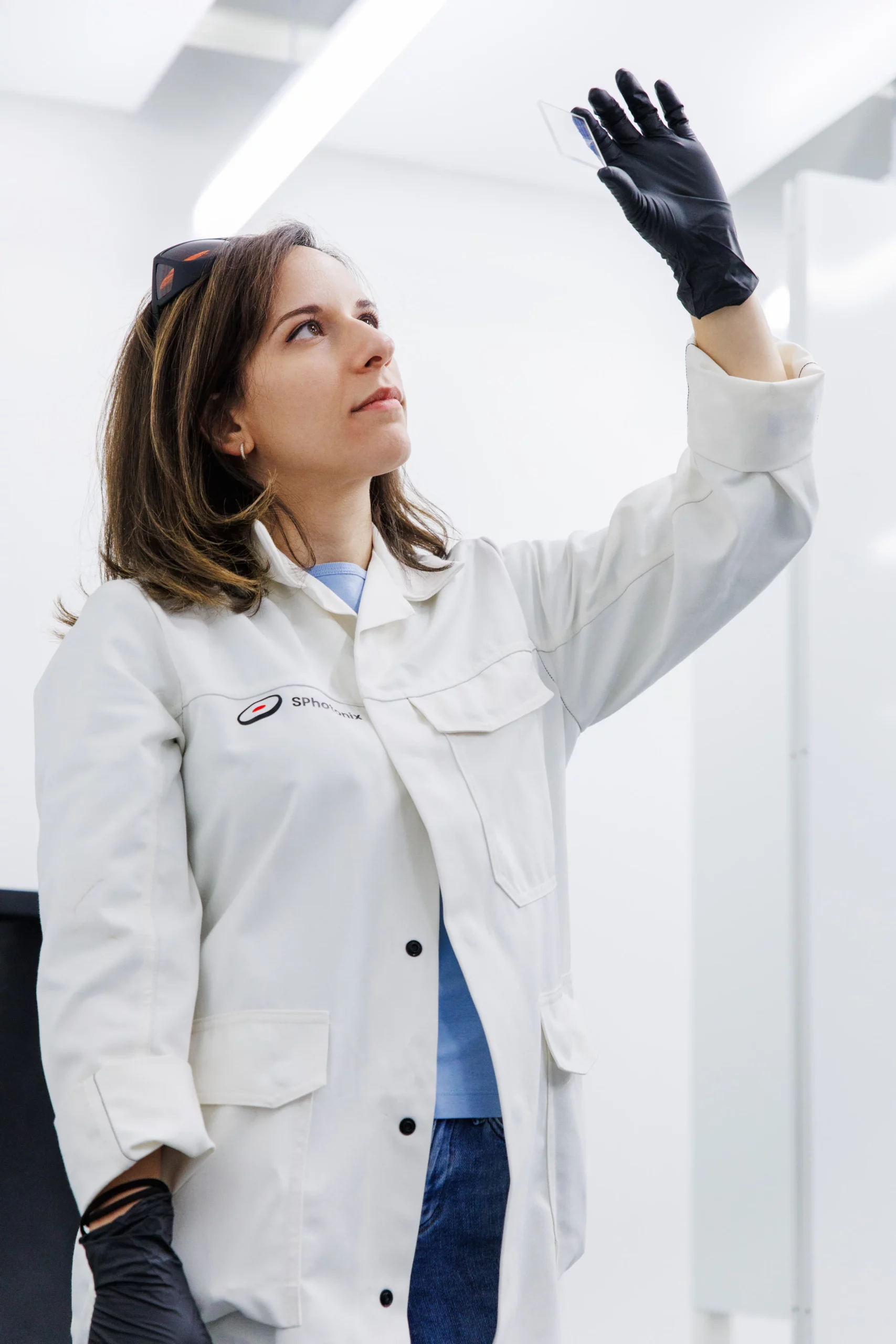
We filmed interviews alongside footage of the equipment and the people operating it. Those two types of material serve different purposes: interviews provide explanation and personality, while laboratory footage gives the audience something concrete to connect with.
For technology businesses, the most useful images are not always the widest views of the most impressive machinery. A hand making a careful adjustment, someone concentrating through a microscope or a small component in context can say more about the work than a room full of equipment on its own.
A different kind of filming environment
Working around lasers meant the environment shaped the production, rather than the other way round. We wore the required laser-protective glasses and adapted our approach to the space and equipment around us.
Some sequences were filmed in very low ambient light so that the lasers could be seen more clearly. We used different lighting techniques, together with haze and smoke effects, to help make the laser paths visible in the video and photographs.
The creative challenge was balance: retain the atmosphere of the laboratory while giving viewers enough visual detail to follow what was happening. Simply making the room brighter would not have achieved the same result.
For a similar production, filming arrangements and any atmospheric effects should be discussed with the laboratory team in advance. A working research space cannot be treated like an ordinary studio.
The bigger story
A human genome, a Tesla and two different crystals
The research behind this technology has an extraordinary history. In 2024, the University of Southampton announced that its team had stored the full human genome on a 5D memory crystal. That crystal was placed in the Memory of Mankind archive in a salt cave in Hallstatt, Austria. Read the university’s announcement.
A separate crystal did travel into space. In 2018, the Arch Mission Foundation sent Isaac Asimov’s Foundation trilogy aboard the Tesla Roadster launched by SpaceX’s Falcon Heavy. Its quartz storage medium used technology developed by Kazansky and the Southampton team. Read about the Foundation Library.
They are two different projects—not a human genome travelling inside a Tesla. Both show why preserving information in glass is such a compelling subject. They are part of the technology’s wider research story, separate from Banana Swift’s production work.
Video and photography, working together
Covering both formats allowed us to approach the same environment in different ways. Video could capture movement, explanation and the working process; photographs could hold a detail, an expression or a moment of concentration.
The finished film and selected photographs bring together the people, laboratory and technical detail behind SPhotonix. For us, the value of returning for a second major project was the chance to continue that story in a new setting, building on a collaboration that began in Southampton.
Planning a film in a specialist workplace?
Three useful starting points for a technology or research shoot:
- Start with what the viewer needs to understand. Decide which ideas need an interview and which are better shown through a process, demonstration or detail.
- Let the location shape the plan. Discuss access, working conditions, protective equipment and filming restrictions with the people responsible for the space.
- Include photography in the brief from the start. Plan for still images as well as moving footage, rather than assuming a frame grabbed from a video will cover every need.